
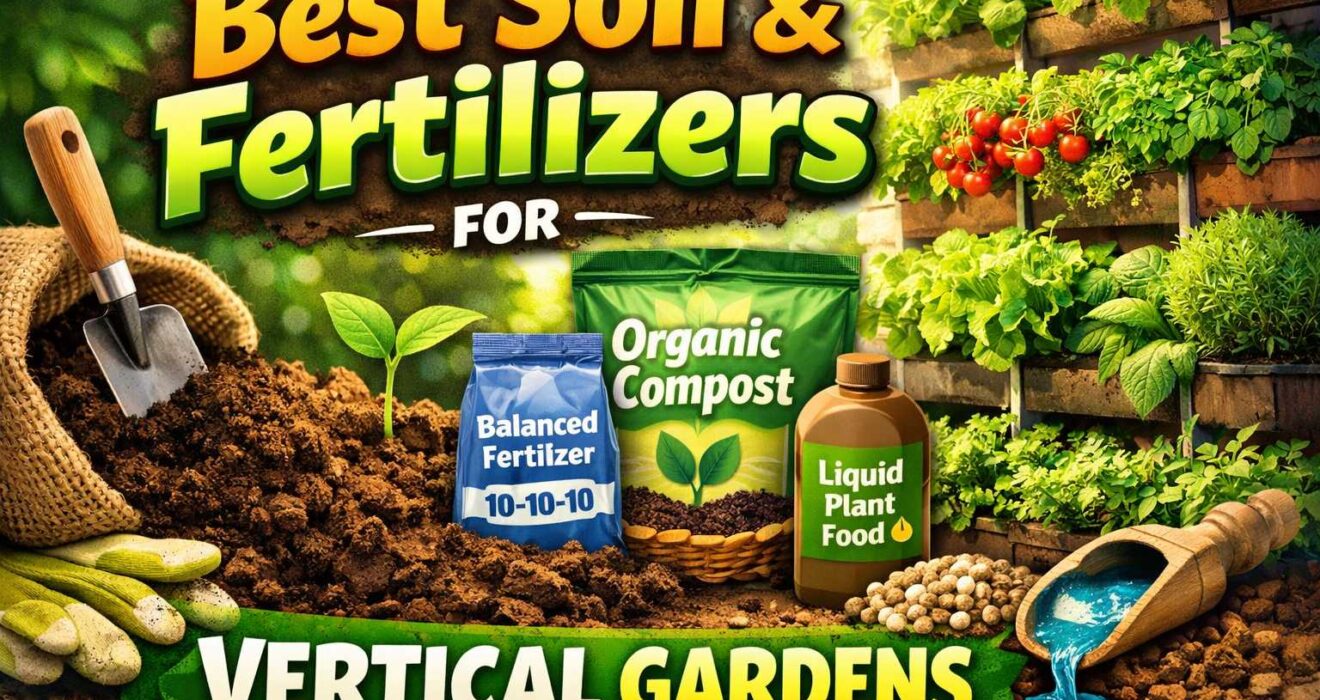
Get this right and your vertical garden will literally thrive. Get it wrong and even the best plants won’t survive. Let’s make sure you get it right!
Why Soil Matters MORE in a Vertical Garden
Here’s something most beginners don’t realise soil for a vertical garden is completely different from regular garden soil.
In a normal pot or garden bed, plants have plenty of soil around them. But in a vertical planter — whether it’s a pocket panel, a modular pod, or a railing planter each plant gets a small, limited amount of soil. That means:
- It dries out faster 🌡️
- It runs out of nutrients faster 💨
- It needs to be light enough not to weigh down your wall ⚖️
- It needs to drain well so roots don’t rot 💧
Regular heavy garden soil just doesn’t cut it. Pack it into a wall pocket and it becomes a dense, waterlogged brick and your plants will suffer for it.
So what works? Let’s break it down! 👇
The Best Soil Mix for Vertical Gardens
The golden formula for vertical garden soil in India is:
🌟 The Perfect Vertical Garden Potting Mix
| Ingredient | Amount | Why It’s Important |
|---|---|---|
| Coco Peat | 50-60% | Lightweight, holds moisture, drains well, eco-friendly |
| Compost / Vermicompost | 20-25% | Adds nutrients, improves soil life |
| Perlite or Coarse Sand | 15-20% | Improves drainage, prevents compaction |
| Neem Cake | A small handful | Natural pest repellent, slow-release fertiliser |
Mix these together and you’ve got the ideal vertical garden potting mix light, nutritious, well-draining, and perfect for Indian conditions.
Let’s Talk About Each Ingredient 🌿
1. Coco Peat – The Hero Ingredient
Coco peat (also called cocopeat or coir pith) is made from coconut husk so it’s abundantly available across India and completely natural. It’s the backbone of any good vertical garden soil mix.
Why it’s great:
- Very lightweight won’t strain your wall or brackets
- Holds moisture well but doesn’t stay soggy
- Naturally resistant to fungal growth
- 100% eco-friendly and biodegradable
- Extremely affordable a 5 kg block costs ₹80-₹150 and expands to fill a huge volume
Where to get it: Any nursery, garden centre, or online at stores like verticalgardening.in 🛒
2. Vermicompost Your Plants’ Favourite Food
Vermicompost is compost made by earthworms breaking down organic matter. It is one of the richest natural fertilisers available and is widely produced across India.
Why it’s great:
- Packed with nutrients nitrogen, phosphorus, potassium, and micronutrients
- Improves soil texture and water retention
- Feeds beneficial microorganisms in the soil
- Completely safe for edible plants like herbs and vegetables
- Odourless and easy to handle
Mix it into your potting soil at the time of planting about 20–25% by volume and your plants will have a solid nutrient base for the first 6–8 weeks.
3. Perlite or Coarse Sand – The Drainage Booster
Perlite is a volcanic glass that looks like tiny white balls. Coarse river sand works similarly. Both improve drainage dramatically.
Why it matters: Without good drainage, water pools at the bottom of pockets and around roots. Root rot follows quickly especially in monsoon season when everything is already wet.
Add 15-20% perlite or coarse sand to your mix and drainage becomes a non-issue.
Tip: Perlite is lighter than sand so for wall-mounted planters, perlite is the better choice to keep the overall weight down.
4. Neem Cake – The Secret Weapon
Neem cake is what’s left after neem oil is extracted from neem seeds. It’s a traditional Indian soil amendment and an incredible natural pest repellent.
Why it’s great:
- Deters soil-based pests like fungus gnats, nematodes, and grubs
- Slowly releases nitrogen into the soil
- Helps prevent fungal diseases in the root zone
- Completely organic and safe
Add just a small handful per pocket or pot when preparing your mix. It’s inexpensive and available at most nurseries across India.
Ready-Made Potting Mix – Is It Okay to Use?
Yes! If mixing your own soil sounds like too much work, ready-made potting mixes are a convenient option. But read the label carefully.
Look for mixes that say:
- ✅ Lightweight / soilless
- ✅ Contains coco peat
- ✅ Good drainage
- ✅ Suitable for container or pot gardening
Avoid mixes that are:
- ❌ Heavy or clay-based
- ❌ “Garden soil” this is too dense for vertical planters
- ❌ Mostly sand no nutrients
The best option is a mix specifically made for vertical or container gardens. Ask your nursery, or check what’s available at verticalgardening.in 🌿
Now Let’s Talk Fertilisers 🌾
Even the best soil runs out of nutrients after a few weeks of watering. That’s just how it works in small containers nutrients get used up by the plant and washed out with every watering.
That’s why regular feeding is non-negotiable for a healthy vertical garden.
Here are the best fertiliser options for Indian vertical gardeners:
🥇 Best Organic Fertilisers
1. Jeevamrutha – The Traditional Indian Superfood
Jeevamrutha is a traditional liquid fertiliser from Indian farming, made with:
- Fresh cow dung
- Cow urine (gomutra)
- Jaggery
- Gram flour (besan)
- A handful of farm soil
It’s teeming with beneficial microorganisms that bring the soil to life. Use it diluted (1 part jeevamrutha : 10 parts water) every 2–3 weeks. Incredibly effective and almost free to make if you have access to the ingredients.
2. Diluted Cow Dung Liquid
Even simpler mix 1 part cow dung with 10–15 parts water, let it sit overnight, strain, and use to water your plants. A slow-release, gentle fertiliser that Indian plants have been fed for centuries.
Available as ready-to-use liquid cow dung fertiliser at most Indian nurseries and garden centres.
3. Vermicompost Tea
Soak a cup of vermicompost in 5 litres of water for 24 hours. Strain out the solids and water your plants with the liquid. This “tea” is rich in nutrients and beneficial microbes and your plants absolutely love it.
4. Banana Peel Liquid
Don’t throw away banana peels! Soak 4–5 peels in 1 litre of water for 2–3 days. The potassium-rich water is brilliant for flowering plants and fruiting herbs. Free, zero-waste, and surprisingly effective.
5. Seaweed Extract
Seaweed-based liquid fertilisers (available online and at nurseries) are excellent for vertical gardens. They’re mild, balanced, and packed with micronutrients and plant growth hormones. They also improve plant immunity useful for keeping diseases away in humid Indian conditions.
Use at half the recommended strength every 2–3 weeks.
Best Chemical / Synthetic Fertilisers
If organic options aren’t convenient, synthetic fertilisers work well too just be careful not to over-dose. Too much chemical fertiliser burns roots and kills plants.
NPK Liquid Fertiliser (19:19:19)
A balanced liquid fertiliser with equal parts Nitrogen (N), Phosphorus (P), and Potassium (K). Great for overall plant health and growth. Dissolve as per the pack instructions (usually 1-2 grams per litre of water) and use every 2-3 weeks.
Growmore / Hydroponic Nutrients
For serious vertical gardeners especially those with hydroponic or semi-hydroponic setups complete hydroponic nutrient solutions provide everything the plant needs in one product.
When to Fertilise – A Simple Schedule 📅
| Season | Frequency | What to Use |
|---|---|---|
| Feb – May (Peak growing) | Every 2 weeks | Full dose of your chosen fertiliser |
| Jun – Sep (Monsoon) | Every 3 weeks | Half dose plants growing but soil stays moist longer |
| Oct – Jan (Winter / slow growth) | Once a month | Light feeding only plants are growing slowly |
Golden rule: Always fertilise on moist soil, never dry soil. Fertilising dry soil can burn roots. Water first, then feed.
Signs Your Plant Needs Fertiliser 🚨
Not sure if your plant is hungry? Look for these signs:
- 🍂 Yellow leaves – especially older leaves at the bottom nitrogen deficiency
- 🌱 Very slow or no growth despite good watering and sunlight
- 🎨 Pale, washed-out colour– leaves losing their rich green
- 🌸 No flowers on flowering plants despite good conditions phosphorus deficiency
- 📏 Stunted growth – plant looks healthy but just isn’t growing
Any of these? Time to feed! Start with a mild dose and see how the plant responds over 7–10 days.
Signs You’re OVER-Fertilising ⚠️
Yes, too much fertiliser is a real problem too. Watch out for:
- 🤎 Brown leaf tips – classic fertiliser burn
- ☠️ Wilting even after watering – salt build-up in the soil damaging roots
- 🌫️ White crust forming on soil surface – mineral salt deposit from over-feeding
If this happens, flush the soil with plain water generously for 2-3 days to wash out the excess salts. Then wait 2 weeks before feeding again and use a lighter dose.
Quick Tips to Remember 📌
✅ Never use plain garden soil in vertical planters too heavy, drains poorly
✅ Coco peat + vermicompost + perlite = the ideal base mix
✅ Add neem cake to every batch of potting mix protects against pests naturally
✅ Feed every 2–3 weeks during growing season small planters run out of nutrients fast
✅ Always water before fertilising never feed dry soil
✅ Organic fertilisers are gentler, safer, and better for long-term soil health
✅ Refresh the potting mix every 12-18 months old soil gets compacted and depleted
Get Everything You Need at Home Garden Decor 🌿
From the right potting mix to quality planters built for Indian conditions we’ve got everything your vertical garden needs to thrive.
👉 Shop now at verticalgardening.in
📞 Need help choosing? WhatsApp us at 8744803809 our team will guide you!




2 Comments
Pingback: Vertical Garden Setup Cost in India - Complete Guide
Pingback: Best Indoor Plants for Vertical Planters in India