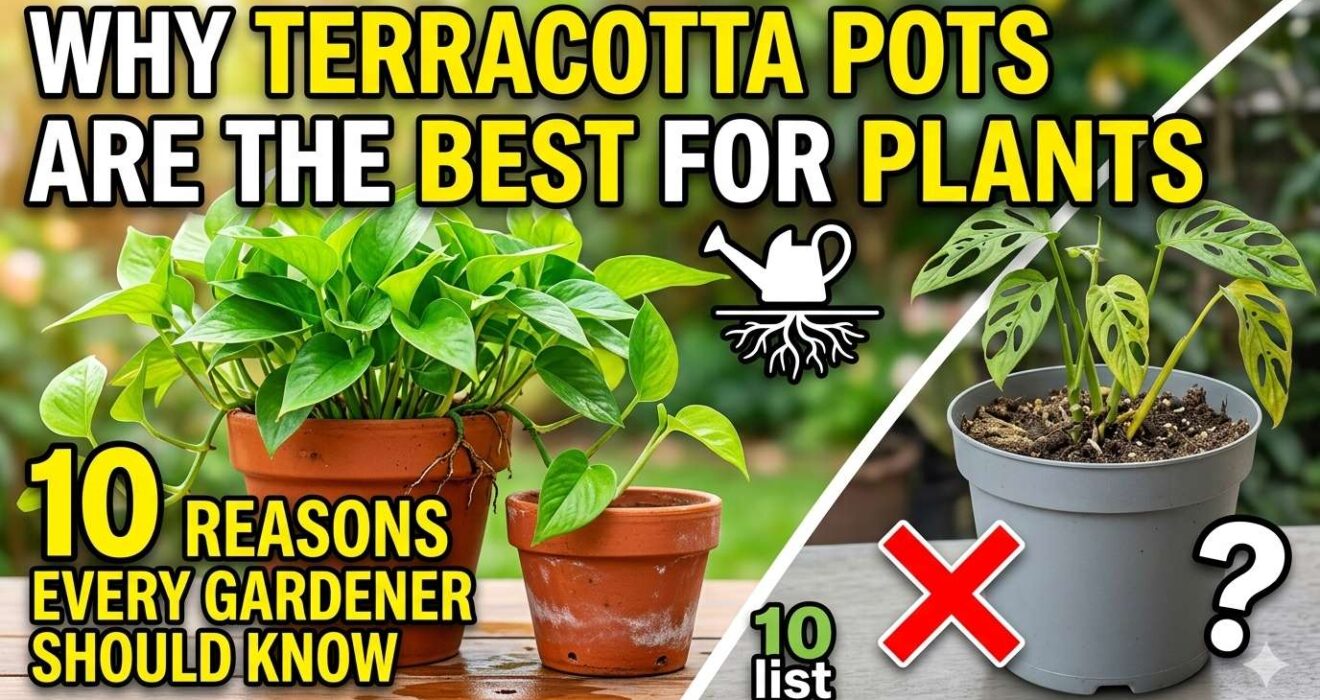
The oldest trick in gardening is still the best one. Here’s why terracotta pots beat plastic, ceramic, and metal every single time!
Terracotta pots have been around for thousands of years. Your grandmother used them. Her grandmother used them. And honestly? There’s a very good reason this humble clay pot has never gone out of style.
In a world full of fancy self-watering pots, plastic planters in every colour, and imported ceramic containers — the simple, earthy terracotta pot still quietly outperforms them all when it comes to plant health.
In this blog, we’ll tell you exactly why terracotta pots are the best choice for most plants, what makes them special, which plants love them the most, and a few things to keep in mind before you buy.
Let’s get into it!
What Is a Terracotta Pot?
Terracotta is an Italian word that literally means “baked earth.” Terracotta pots are made from natural clay that is shaped and fired in a kiln at high temperatures. The result is that classic warm reddish-brown pot you’ve seen in every Indian home, balcony, and garden for as long as you can remember.
They’re simple. They’re natural. And they’re brilliant for plants.
10 Reasons Terracotta Pots Are the Best for Plants
1. They Let Roots Breathe
This is the biggest reason plant experts swear by terracotta and it’s something plastic pots simply cannot offer.
Terracotta is porous. That means tiny pores run through the walls of the pot, allowing air to move in and out. This means the roots of your plant get a constant, gentle supply of oxygen which is essential for healthy root growth.
Plastic pots trap air and moisture inside. Roots in plastic pots are often suffocating in stagnant, oxygen-poor soil. Roots in terracotta pots? They breathe. They thrive.
Best for: All plants but especially succulents, cacti, herbs, and any plant that hates sitting in wet soil.
2. They Prevent Overwatering – Naturally
Overwatering is the number one reason houseplants die in India. And terracotta pots are the easiest natural fix for this problem.
Because terracotta is porous, excess moisture evaporates through the walls of the pot. The pot literally breathes out water. This keeps the soil at the perfect moisture level not too wet, not too dry without you having to think about it too much.
With a plastic pot, water has nowhere to go except the drainage hole at the bottom. Soil stays wet for longer, increasing the risk of root rot significantly.
For beginner gardeners especially, terracotta pots are genuinely forgiving they do a lot of the moisture management work for you.
3. They Regulate Soil Temperature
Indian summers can be brutal soil in a small plastic pot sitting on a sunny balcony can heat up to dangerously high temperatures that damage or kill roots.
Terracotta naturally insulates the soil against extreme temperature changes. The thick clay walls absorb heat slowly and release it slowly keeping the root zone at a more stable, comfortable temperature even on hot days.
This thermal buffering effect is one of the biggest reasons terracotta pots are perfect for Indian gardens, where temperature swings between morning and afternoon can be dramatic.
4. They Are 100% Natural and Eco-Friendly
Terracotta pots are made from clay a completely natural material. No plastics. No synthetic chemicals. No harmful manufacturing processes.
At the end of their life, terracotta pots are fully biodegradable. A broken clay pot can be crushed and mixed back into garden soil as a drainage material. There’s zero waste.
Plastic pots, on the other hand, take hundreds of years to break down and contribute massively to landfill waste. For environmentally conscious gardeners choosing terracotta is one of the simplest swaps you can make.
5. They Support Indian Artisans and Local Craft
Terracotta pottery is one of India’s oldest and most widespread traditional crafts. Potters (kumhars) across India from Rajasthan and UP to West Bengal and Tamil Nadu have been hand-throwing clay pots for generations.
When you buy terracotta pots, especially from local potters and markets, you are directly supporting Indian artisan communities and keeping a centuries-old craft alive.
That’s something no injection-moulded plastic pot can ever say.
6. They Look Beautiful Naturally
There’s a reason terracotta pots have never gone out of style they just look good. The warm, earthy reddish-brown colour of clay complements every plant, every leaf colour, and every home aesthetic.
Whether your home is traditional Indian, modern minimal, boho, or eclectic a terracotta pot fits right in. As they age, terracotta pots develop a beautiful natural patina white mineral deposits and mossy patches that give them a lived-in, organic character that no plastic pot can replicate.
7. They Are Extremely Affordable
A basic terracotta pot in India costs as little as ₹20 to ₹80, depending on size. Even a large 12-inch terracotta pot rarely crosses ₹150–₹200.
For the quality, the plant health benefits, and the longevity they offer, terracotta pots are genuinely one of the best value gardening purchases you can make. You can build a beautiful collection of 10-15 pots for ₹500-₹1,000 try doing that with ceramic or fibreglass!
8. They Come in Every Size You Need
From tiny 3-inch pots for small succulents and seedlings to massive 18-inch pots for large shrubs and small trees terracotta pots are available in a huge range of sizes across India.
This makes it easy to find the perfect size for every plant which matters a lot. A plant in a pot that’s too big drowns in too much wet soil. A plant in a pot that’s too small gets rootbound. Terracotta’s wide size range means you can always get the fit right.
9. They Are Easy to Sterilise and Reuse
When a plant in a terracotta pot dies (it happens to everyone!), the pot can be cleaned, sterilised, and used again immediately.
How to clean a terracotta pot properly:
- Remove all old soil and roots
- Scrub with a stiff brush under running water
- Soak in a solution of 1 part white vinegar to 10 parts water for 30 minutes
- Rinse thoroughly and let it dry completely in the sun
This removes any built-up salts, minerals, or pathogens and your pot is ready for its next plant. Terracotta pots can be reused for decades with basic care.
10. Plants Actually Grow Better in Terracotta
When you put all the benefits together better aeration, better drainage, better temperature regulation, natural moisture management you get one clear result: plants are generally healthier and grow better in terracotta pots.
This isn’t just gardening folklore. Horticulturists and plant scientists consistently find that plants in unglazed terracotta outperform the same plants in plastic containers on metrics like root health, growth rate, and resistance to disease.
Your plants can feel the difference, even if they can’t tell you!
Which Plants Love Terracotta Pots the Most?
Almost all plants do well in terracotta, but some absolutely thrive in them:
| Plant Type | Why Terracotta Works Perfectly |
|---|---|
| Succulents & Cacti | Love the fast drainage and dry conditions terracotta creates |
| Herbs (tulsi, mint, curry leaves, coriander) | Prefer well-draining soil terracotta is ideal |
| Flowering plants (marigold, petunias, roses) | Root health is critical for blooming terracotta helps |
| Snake plant & ZZ plant | Hate wet feet terracotta keeps things dry enough |
| Fruit trees in containers (lemon, guava) | Need deep, well-aerated root zones |
| Vegetables (tomato, chilli, brinjal) | Better yields in terracotta vs plastic |
Which Plants Should Avoid Terracotta?
Terracotta is great for most plants but a few moisture-loving plants actually prefer to stay wetter:
- Ferns – prefer consistently moist soil; terracotta can dry out too fast for them
- Peace lily – likes moist soil; may need more frequent watering in terracotta
- Aquatic and bog plants – obviously need water-retaining containers, not porous ones
For these plants, a glazed ceramic pot or a plastic pot with a saucer works better.
Tips for Using Terracotta Pots – Get the Most Out of Them!
🪴 Soak New Pots Before Use
Before planting anything in a brand new terracotta pot, soak it in water for 30 minutes. New terracotta is very dry and will suck moisture away from your plant’s roots immediately. Soaking it first means the pot’s walls are already saturated and won’t steal water from your plant.
🪴 Always Use Pots With Drainage Holes
All good terracotta pots have a drainage hole at the bottom. Never block it. Use a small piece of broken pot (or a piece of mesh) over the hole to prevent soil from washing out while still allowing drainage.
🪴 In Summer, You’ll Need to Water More Often
Because terracotta breathes and evaporates moisture, your plants may need watering more frequently in Indian summers compared to plastic pots. Check the soil every 1-2 days during March-June.
🪴 Use a Saucer in Dry Climates
In very hot, dry areas like Rajasthan or interior Maharashtra, placing a saucer under your terracotta pot helps retain some moisture at the base. Remove it during monsoon to prevent waterlogging.
🪴 Handle With Care
Terracotta is strong but brittle – it cracks if dropped or knocked hard. Handle with care, especially larger pots. In areas with extreme frost (rare in India, but relevant in Kashmir and Himalayan foothills), bring terracotta pots indoors in winter as frost can crack them.
Terracotta vs Plastic Pots – Quick Comparison
| Feature | Terracotta | Plastic |
|---|---|---|
| Root aeration | ✅ Excellent – porous walls | ❌ Poor – sealed walls |
| Drainage | ✅ Excellent | ⚠️ Depends on holes only |
| Overwatering risk | ✅ Low | ❌ High |
| Temperature regulation | ✅ Good insulation | ❌ Heats up fast |
| Eco-friendly | ✅ 100% natural | ❌ Petroleum-based |
| Cost | ✅ Very affordable | ✅ Also affordable |
| Weight | ⚠️ Heavier | ✅ Lightweight |
| Looks | ✅ Beautiful, natural | ⚠️ Varies |
| Lifespan | ✅ Decades with care | ⚠️ Fades and degrades |
Final Thoughts
Terracotta pots are not just nostalgic or traditional they are genuinely the best container for most plants, backed by centuries of gardening wisdom and modern horticultural science.
If you want healthier plants, fewer watering worries, and a natural, beautiful look for your garden terracotta is the answer. It’s affordable, eco-friendly, widely available across India, and your plants will genuinely thank you for it.
Whether you’re setting up a window garden, a balcony display, a kitchen herb corner, or a full vertical garden start with terracotta. You won’t regret it. 🌿
Happy Gardening! – Team Home Garden Decor 🌱 📍 verticalgardening.in