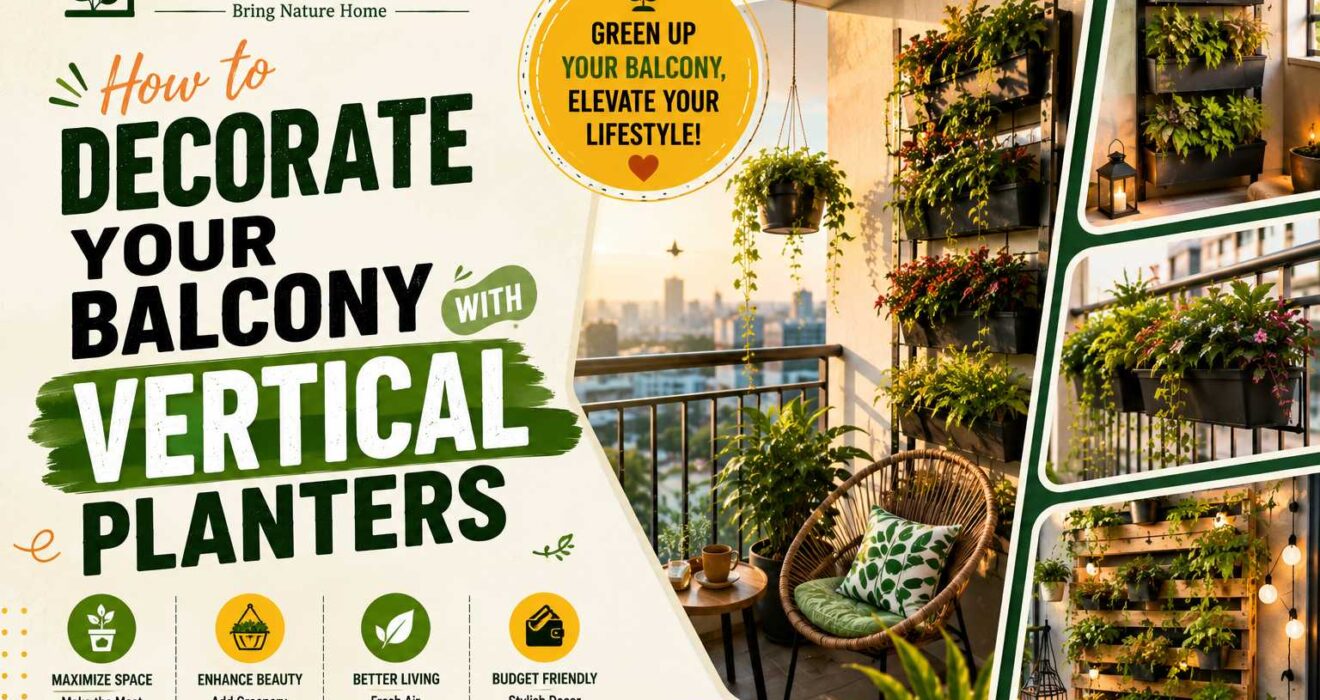
Does your city balcony currently serve as a storage dump for old cartons and dust? Imagine stepping out every morning into a lush, layered garden where jasmine scents the air and tulsi waits to be plucked for your tea—all without sacrificing a single square foot of floor space. This dream is entirely achievable when you decorate your balcony with vertical planters.
In India’s compact urban homes, the balcony is often the only personal outdoor space. But horizontal space runs out quickly. That’s where the magic of vertical gardening comes in. By growing up the walls, railing, and even the ceiling, you reclaim every inch. More importantly, a well-decorated vertical garden transforms a dull balcony into a serene extension of your home. Let’s explore how to do it, the Indian way.
1. First, Understand Your Balcony’s Unique Personality
Before you buy a single planter, spend a day observing your balcony. Indian balconies vary wildly—some face harsh west sun, others are perpetually shaded by the neighbouring tower, and many bear the brunt of monsoon winds. Your decor choices must respect these conditions.
- Light mapping: Does your balcony get direct morning light, afternoon scorch, or mostly bright indirect light? South and west-facing balconies in India demand sun-hardy planters; north-facing ones suit lush foliage.
- Wind and rain exposure: Upper-floor balconies in Mumbai or coastal cities receive strong, salty winds. Choose sturdy, heavy-bottomed vertical planters and wind-resistant plants. During monsoon, ensure wall-mounted systems have adequate drainage so water doesn’t pool against the wall.
- Wall material: Check if your wall is concrete, brick, or tiled. You can drill into concrete for permanent vertical frames, but rented apartments might need damage-free solutions like tension rods, over-the-railing planters, or adhesive hooks rated for weight.
2. Pick the Right Vertical Planter for Each Zone
There is no one-size-fits-all. The key to a stunning balcony is mixing different vertical planter types that suit each available surface.
A. Wall-Mounted Pocket Planters
Felt or plastic pocket organisers fixed to the wall act like living tapestries. These are perfect for growing herbs, leafy greens, and small flowering annuals like pansies in winter. Opt for a modular system that allows you to replace a pocket if needed. For an Indian aesthetic, line the pockets with coconut husk to retain moisture during hot summers.
B. Railing Planters
Clip-on saddle planters that straddle your balcony railing are a zero-footprint hero. They are ideal for trailing plants like money plant, dwarf bougainvillea, or cascading petunias. Choose UV-stabilized plastic planters that won’t crack under the Indian sun, or go for elegant powder-coated metal troughs that match your railing’s colour.
C. Wooden Ladder or Tiered Stands
A leaning bamboo or sheesham wood tiered stand can hold multiple pots in a vertical arrangement without touching the wall. This works beautifully on covered balconies. Arrange terracotta pots of varying sizes, painted with traditional Warli or Madhubani motifs for a folk-art vibe. The upper tiers can showcase trailing succulents, while the lower shelf holds a small fern or a pot of aromatic curry leaf.
D. Hanging Planters and Macramé
Suspend jute-knotted macramé hangers from sturdy ceiling hooks or the balcony slab overhead. This draws the eye upward and makes the balcony feel taller. In India, you can easily source cotton or jute macramé planters from local artisans. Use them for spider plants, chlorophytum, or cascading pothos. For a unique twist, hang a row of coloured glass lanterns alongside the planters to reflect light.
E. Stackable Vertical Towers
These tiered pots stack one above the other on a central pole, taking up the footprint of a single pot but allowing 5-15 plants. They are fantastic for creating a strawberry or lettuce tower. On a sunny balcony, a stackable planter full of portulaca (9 o’clock flower) will become a pillar of colour.
3. Weave a Decor Theme That Reflects You
Vertical planters are the canvas; your styling ties it all together. Choose a theme that resonates with your personality and the architecture of your home.
- The Indian Kabaad Se Jugaad Balcony: Embrace upcycled decor. Use old wooden crates mounted on the wall, paint discarded plastic bottles into charming vertical planters, or hang empty coconut shells as small succulent pots. Combine this with a repurposed charpai bench and some colourful floor cushions. It’s sustainable, affordable, and full of character.
- Tropical Urban Jungle: Mix large-leaved plants like monstera (if protected from scorching sun) with ferns and philodendrons in wall-mounted planters. Lay bamboo screening against one wall to hide an unsightly AC outdoor unit and mount planters on it. Add a cane chair and a small water feature for a resort-like feel.
- Fragrant Wellness Corner: Focus on aromatics. Install vertical pocket planters with tulsi, ajwain, lemongrass, mint, and citronella. Decorate the railing with hanging incense stick holders and install a small copper bell. This becomes a healing space for morning yoga or chai.
- Modern Monochrome: Use sleek white or black geometric wall planters, coupled with stainless steel railing boxes. Plant only green foliage—snake plants, ZZ, and asparagus fern. Add a minimal floor deck and subtle LED strip lighting on the planter edges for a contemporary night glow.
4. Choose Plants That Thrive in Indian Balconies
Your vertical garden decor will only look good if the plants are healthy. Select wisely based on your light.
For Full Sun (4+ hours direct light):
- Flowers: Marigold (gainda), periwinkle (sadabahar), dwarf zinnia, bougainvillea (dwarf varieties in railing planters), portulaca.
- Herbs & Veggies: Tulsi, lemongrass, green chilli, coriander (in cooler months), fenugreek (methi).
- Succulents: Agave, echeveria, and sedum planted in small wall-mounted cement pots.
For Bright Indirect Light / Shade:
- Foliage: Money plant (golden pothos), philodendron, spider plant, snake plant (sansevieria), syngonium, peace lily.
- Ferns: Boston fern or asparagus fern in hanging baskets.
- Air-purifying: Areca palm (dwarf tabletop version) or rubber plant kept on lower tier.
Seasonal Tips: Rotate annuals. During winter (October–February), fill vertical pockets with pansies, dianthus, and calendula. In summers, switch to sun-loving vinca and gomphrena. For monsoon, choose plants that love humidity, such as coleus and caladium, but ensure excellent drainage to avoid root rot.
5. Layer Your Decor Step by Step
A common mistake is placing all planters at the same level, which looks flat. Instead, create depth by layering vertically.
- Backdrop layer: Mount the largest wall planters or a full vertical frame on the main wall. Use tall, upright plants at the back—like a wall of areca palm leaves or robust snake plant foliage.
- Mid-layer magic: Install a railing planter at waist height, densely packed with trailing plants that will cascade downwards and soften the railing lines.
- Suspended accents: Hang two to three macramé planters at different heights in a corner or above seating. Vary the rope lengths for an organic flow.
- Floor punctuation: Even in a vertical garden, a single large floor pot (like a rubber plant or a fragrant mogra bush) anchors the space. Choose a slim, tall planter that doesn’t eat floor area.
- Accessories infusion: Now weave in non-plant decor: a wall-mounted solar lantern, a sleek wind chime, a small round mirror tucked among foliage to reflect light, or a set of terracotta bird feeders. These elements turn the greenery into a complete living room.
6. Keep Your Vertical Balcony Garden Looking Lush
Indian balconies face unique challenges—heatwaves, dusty winds, and monsoon torrents. Your maintenance routine must adapt.
- Watering wisely: Wall-mounted and railing planters dry out faster than ground pots. In peak summer, you might need to water them twice a day, preferably early morning and after sunset. Consider installing a simple drip irrigation kit that connects to a bucket reservoir, a life-saver for busy days.
- Drainage is sacred: Never let water accumulate in vertical pockets. If using decorative cachepots, always place the plant in a nursery pot with holes, and empty the outer pot after heavy rain. This prevents mosquito breeding and root rot.
- Dust and shine: City dust settles on leaves and blocks photosynthesis. Wipe broad leaves with a damp cloth weekly. For delicate foliage, give a gentle shower using a spray bottle. This keeps your vertical garden looking vibrant and fresh.
- Pruning for fullness: Regularly pinch back leggy stems on herbs and flowering plants. This encourages bushier growth, making your vertical display look dense and lush rather than straggly.
- Monsoon care: Reduce watering frequency, ensure no planter overflows against the wall plaster, and watch out for fungal spots. Apply a neem oil spray every 15 days as a preventative measure, a proven Indian organic hack.
Ready to Turn Your Balcony into a Vertical Haven?
Decorating your balcony with vertical planters is not just about adding greenery—it’s about reclaiming your sanctuary in the concrete jungle. Whether you have a tiny 3×5 feet gallery or a long, narrow running balcony, vertical thinking opens up endless possibilities. Start with one wall or the railing, plant something you love, and watch how your apartment begins to breathe differently.
🏡 Deepen Your Balcony Gardening Journey
Now that you know how to decorate your balcony with vertical planters, take the next step. These handpicked resources from Vertical Gardening India will help you choose the right gear, plants, and DIY techniques to make your balcony the envy of the neighborhood.
- 10 Best Vertical Garden Planters for Balconies in India: Buyer’s Guide – Compare materials, sizes, and prices to find your perfect match.
- How to Set Up a Self-Watering Vertical Garden: A DIY Guide – Leave for a vacation without worrying. Build an automated watering system.
- Top 15 Balcony Plants That Survive Indian Summers and Winters – Pick seasonal champions that look good in vertical displays all year.
- Upcycled Vertical Planter Ideas: Transform Plastic Bottles & Pallets – Budget-friendly, sustainable decor that adds unique charm.
- Monsoon-Proof Your Balcony Garden: Essential Protection Tips – Save your vertical planters from heavy rain and humidity damage.
Let your walls speak green. Happy decorating!