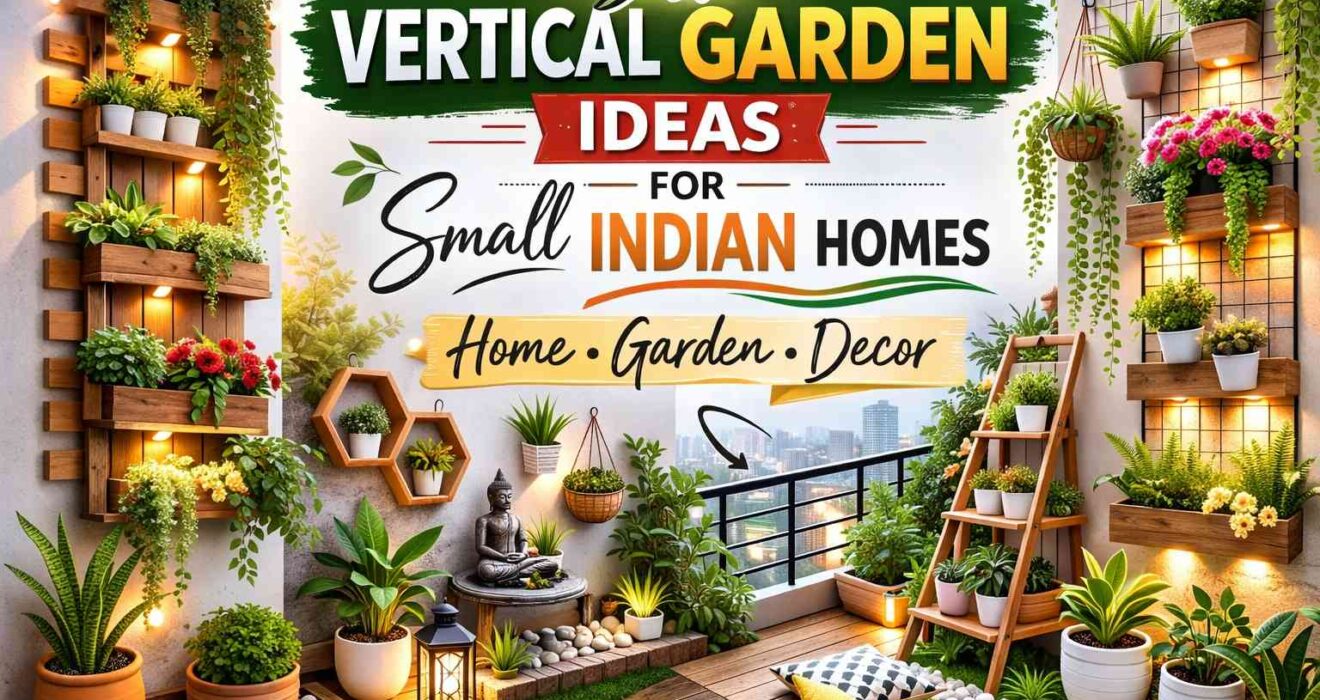
Space has always been a premium in Indian urban homes. Whether you live in a 1BHK apartment in Mumbai, a compact flat in Bengaluru, or a terrace home in Delhi, the craving for greenery never diminishes. Vertical gardens also called living walls or green walls offer the perfect solution. Instead of spreading plants outward, you grow them upward, turning bare walls, balconies, staircases, and even kitchen corners into lush, breathing canvases of green.
Beyond aesthetics, vertical gardens help purify indoor air, reduce ambient temperatures (especially important in Indian summers), dampen noise, and bring a profound sense of calm into high-stress urban lives. The good news? You don’t need a large budget or professional landscaping expertise. With a little planning, the right plant choices, and some creativity, any Indian homeowner or renter can build a stunning vertical garden.
This comprehensive guide covers the best vertical garden ideas perfectly suited to Indian homes, climates, and lifestyles.
Why Vertical Gardens Are Perfect for Indian Homes
Indian homes particularly city apartments face a unique set of challenges: intense heat, high humidity in coastal regions, water scarcity, limited balcony space, and landlord restrictions on wall modifications. Vertical gardens elegantly solve many of these issues:
Space Efficiency: A 2-foot-wide wall section can host 20-30 plants that would otherwise require 60-80 square feet of floor space.
Thermal Insulation: A living wall can reduce the surface temperature of an exterior wall by 5-10°C, cutting down on air conditioning costs significantly during Indian summers.
Air Purification: NASA’s Clean Air Study identifies plants like spider plants, money plants, and peace lilies as excellent absorbers of formaldehyde, benzene, and carbon monoxide pollutants common in Indian urban air.
Mental Wellbeing: Studies consistently show that exposure to greenery reduces cortisol (stress hormone) levels a major benefit for anyone navigating the daily stress of Indian city life.
Cultural Resonance: Indians have a deep cultural connection to plants and nature from tulsi plants in courtyards to mango leaves at doorways. A vertical garden is a modern extension of this age-old tradition.
1. Pocket Planter Wall Panels
One of the most popular and affordable vertical garden ideas in India is the fabric or felt pocket panel system. These are flat panels usually made of UV-resistant felt, canvas, or geotextile fabric with multiple pockets sewn into rows. Each pocket holds one plant.
Why It Works for Indian Homes
Fabric pocket panels are lightweight, making them perfect for renters who cannot drill into walls. You can hang them using tension rods, adhesive hooks, or over balcony railings without causing permanent damage. They are also highly breathable, which prevents root rot a common problem in India’s humid climates.
Best Plants for Pocket Panels
The best plants for pocket panels in Indian conditions are those that tolerate heat, require minimal watering, and have shallow root systems. Money plant (Epipremnum aureum) is practically indestructible and thrives even in low light perfect for interior walls. Spider plants handle neglect beautifully. Portulaca (moss rose) adds vibrant colour on sunny balconies. Herbs like mint, coriander, and curry leaves are incredibly practical for Indian kitchens.
DIY Tips
You can create a DIY pocket panel using an old bedsheet, jute bags, or cut sections of canvas. Sew rows of pockets about 15–20 cm deep, fill with a lightweight potting mix (coco peat + perlite + compost), and plant away. A 3×5 panel of pockets can hold 15 plants and costs as little as ₹500–₹800 in materials.
2. Pallet Gardens – Upcycled and Rustic
Wooden pallets are widely available across India, often discarded outside warehouses, hardware stores, or furniture shops. A single wooden pallet transformed into a vertical garden instantly adds a rustic, earthy charm to any wall or balcony.
How to Make a Pallet Garden
Select a pallet that is stamped “HT” (heat-treated), not “MB” (methyl bromide treated), as the latter can be toxic. Sand it smooth, apply a coat of waterproof paint or wood stain to protect against India’s monsoons, and line the inner compartments with landscape fabric or coconut coir. Fill with potting soil and plant succulents, ferns, or small flowering plants between the slats.
Ideal Placement in Indian Homes
Pallet gardens work beautifully leaned against a balcony wall, a boundary wall in a bungalow compound, or even against an internal feature wall as a focal point in the living room. Ensure the pallet is secured against tipping this is especially important during monsoon winds.
Plants That Thrive in Pallet Gardens
Succulents like aloe vera, jade plant, and echeveria are excellent choices because they need very little water and flourish in India’s sunny conditions. Ferns such as Boston fern or maidenhair fern add texture and do well in shaded, humid spots like bathrooms or north-facing balconies.
3. Trellis and Climber Gardens
A trellis is a lattice framework wooden, metal, or bamboo fixed to a wall or freestanding, over which climbing plants are trained to grow. This is arguably the most traditional form of vertical gardening in India, as seen in older homes with bougainvillea creeping over compound walls or passion fruit vines scaling kitchen garden fences.
Modern Trellis Ideas for Urban Indian Homes
For modern apartments, a slim powder-coated metal trellis fixed to a balcony wall can host a stunning display of jasmine (mogra), which perfumes the entire flat on summer evenings. A bamboo trellis in the living room corner, supporting a pothos or money plant trained upward, adds dramatic height without taking up floor space.
Best Climbers for Indian Conditions
Bougainvillea is a classic drought-tolerant, fast-growing, and available in a dozen vibrant colours. Jasmine (Jasminum sambac) is perfect for balconies and delights the senses. Passion fruit (Passiflora) grows rapidly and rewards you with edible fruits. For edible climbers on kitchen balconies, bitter gourd (karela), bottle gourd (lauki), and beans are excellent options that provide fresh produce in addition to greenery.
Installation Note
Fix trellises at least 5–8 cm away from the wall using spacers this ensures air circulation behind the climber, prevents moisture accumulation that can damage walls, and gives the plant room to weave through the lattice properly.
4. Hanging Planter Systems
Hanging planters arranged in vertical clusters are one of the most versatile and visually striking vertical garden styles for Indian homes. Unlike fixed wall systems, hanging planters can be rearranged, moved indoors during heavy rain, or taken with you if you move.
Macramé Hangers – A Boho Indian Revival
Macramé plant hangers have seen a massive revival in Indian interior design, blending beautifully with both the bohemian aesthetic and with traditional Indian home décor. Knotted cotton or jute rope hangers holding terracotta pots bring warmth and texture to bare walls. You can find handmade macramé hangers at local craft markets, online, or even learn to make them yourself a trending hobby among Indian millennials.
Ceiling Hooks and Cascading Displays
In rooms with high ceilings (common in older Delhi bungalows or heritage buildings in Chennai and Kolkata), ceiling hooks can hold multiple hanging planters at different heights, creating a lush, cascading canopy effect. Trailing plants like string of pearls, English ivy, or the ever-popular money plant work beautifully in this arrangement.
Balcony Railing Planters
Hook-over railing planters that clip onto balcony railings without drilling are ideal for renters. Long window box planters hung from railings can hold a continuous row of colourful petunias, marigolds (marigold is deeply auspicious in Indian culture), or a herb garden of tulsi, mint, and lemongrass.
5. Modular Wall-Mounted Planter Systems
Modular planter systems consist of individual planting pods or boxes that interlock or attach independently to a wall. They offer the most design flexibility you can start with just 6 pods and scale up to 60 over time, adjusting your arrangement as you like.
Popular Options Available in India
Several Indian brands now manufacture modular planter systems designed for local conditions. These typically use UV-stabilised plastic or powder-coated metal frames. Each module holds a single plant in a pot with an integrated water reservoir at the bottom, which significantly reduces watering frequency a major advantage during busy workweeks.
Design Possibilities
Modular systems allow you to create geometric patterns chevrons, honeycomb shapes, or the popular “living picture frame” where plants are arranged to fill the outline of a decorative frame. Some homeowners in Indian cities have created stunning living walls in their drawing rooms by mixing plants with different foliage textures and colours: dark green ferns alongside bright silver pothos, purple wandering jew, and chartreuse baby tears.
Smart Modular Systems
Higher-end modular systems come with integrated drip irrigation that connects to a timer a worthwhile investment for those who travel frequently or live in particularly hot and dry climates like Rajasthan or interior Maharashtra. Some systems also include grow lights built into the frames, enabling a thriving garden even in rooms with no natural light.
6. Repurposed Household Item Gardens
One of the most charming and budget-friendly vertical garden ideas, especially popular on Indian social media and in sustainable living communities, is using repurposed household items as planters arranged in vertical formations.
Ideas That Work Brilliantly
Old wooden ladders leaned against a wall and fitted with planter boxes on each rung make a gorgeous tiered display. A collection of mismatched terracotta pots mounted on a painted wooden board creates a rustic, Goa-inspired statement piece. Old colanders, tin dabbas (lunch boxes), painted plastic bottles, broken clay pots, gunny sacks, and even old rubber chappals have all been used creatively as planters in Indian vertical gardens.
The Plastic Bottle Tower A Zero-Waste Solution
Cutting 2-litre plastic bottles in half and stringing them vertically through a rope or wire with drainage holes cut into the bottom of each and each bottle feeding water down to the next creates a self-watering vertical tower. This is an incredibly popular idea in Indian schools, low-income housing schemes, and among eco-conscious urban homeowners. A single tower of 8–10 bottles can grow herbs, lettuce, or spinach in barely 2 square feet of space.
7. Bamboo Vertical Gardens
Bamboo is one of India’s most abundant, affordable, and sustainable materials. It aligns perfectly with Indian sustainability ethos and looks gorgeous against both traditional and contemporary home interiors.
Bamboo Pole Planters
Thick bamboo poles (8-10 cm diameter) can be cut into segments, sealed at the bottom, filled with soil, and mounted horizontally on a wall to create individual planters. A wall covered in a grid of bamboo pole planters each holding a different plant is a striking, completely natural, and biodegradable vertical garden system.
Bamboo Trellis Screens
Bamboo trellis panels are available at nearly every nursery in India and are incredibly affordable. As a freestanding room divider covered in climbing plants, a bamboo trellis panel beautifully separates the living and dining areas in open-plan apartments while bringing nature indoors.
8. Kitchen Herb Walls – Functional and Fragrant
The Indian kitchen is the heart of the home, and a kitchen herb wall brings function, freshness, and fragrance to this beloved space.
What to Grow
Curry leaves (kadi patta) are essential in South Indian cooking and grow vigorously. Tulsi (holy basil) has deep spiritual significance and thrives in Indian conditions. Mint, coriander (dhania), fenugreek (methi), green chilli plants, and ajwain (carom) all do well in small pots and can be trained onto a kitchen wall trellis or arranged in pocket panels near a window.
Wall-Mounted Magnetic Herb Stations
A modern and sleek option for contemporary Indian kitchens is the magnetic herb station a metal panel fixed to the wall onto which individual magnetic planter pods can be placed. This allows you to rearrange your herbs, take individual pots down for harvesting, and keep the kitchen looking tidy and curated.
Lighting for Kitchen Herb Walls
Many Indian kitchens lack adequate natural light. Inexpensive LED grow light strips now widely available on Indian e-commerce platforms can be fixed under the cabinet above the herb wall to supplement sunlight, ensuring herbs grow lush and healthy year-round.
9. Vertical Water Garden For Humid Coastal Homes
For homeowners in coastal cities like Mumbai, Kochi, Chennai, or Goa, where humidity is naturally high, aquatic and semi-aquatic plants offer a stunning vertical garden option that thrives with minimal care.
Cascading Water Wall
A cascading water wall a panel of slate, pebbles, or terracotta tiles over which a thin film of water flows continuously, with pockets of aquatic plants like water mint, papyrus, or taro growing from water-filled reservoirs creates a mesmerising, meditative focal point. The sound of trickling water reduces stress, and the evaporation naturally cools the surrounding air.
Simpler Moisture-Loving Wall Gardens
In naturally humid coastal homes, ferns like the staghorn fern (which can be mounted directly on wooden boards), mosses, and bromeliads create effortlessly beautiful living walls that practically care for themselves thanks to the ambient moisture.
10. Staircase Gardens
If you live in a duplex, independent house, or multi-storey bungalow, your staircase wall is a spectacular and often underutilised canvas for a vertical garden.
Tiered Pot Display
Placing plants at graduated heights along a staircase wall smaller plants at the lower steps, taller ones at the landing creates a theatrical, gallery-like effect. A mix of flowering plants (hibiscus, peace lily, anthurium) and foliage plants (rubber plant, monstera, pothos) at different heights creates both drama and biodiversity.
Wall-Mounted Planter Shelf Ladders
Slim wooden or iron shelf units fixed to the staircase wall and loaded with a curated collection of small potted plants are both practical and beautiful. In traditional Indian homes, this is a wonderful way to display a collection of brass or copper pots used as planters, blending the vertical garden with cultural identity.
Essential Tips for Maintaining Vertical Gardens in India
Watering: Vertical gardens dry out faster than ground gardens because of gravity and increased air exposure. In Indian summers, daily watering may be necessary for outdoor vertical gardens. Consider a drip irrigation system with a timer for larger installations.
Soil Mix: Use a lightweight, well-draining potting mix for vertical gardens. A combination of coco peat (60%), compost (20%), and perlite or coarse sand (20%) works very well in Indian conditions. Avoid heavy garden soil, which compacts in small containers and suffocates roots.
Fertilising: Plants in vertical gardens have limited soil volume and deplete nutrients faster. Feed with liquid fertiliser (diluted cow dung liquid fertiliser, jeevamrutha, or commercial NPK liquid feed) every 2–3 weeks during the growing season (February to October in most of India).
Monsoon Care: Move outdoor vertical panels indoors or to a sheltered spot during heavy monsoon rains to prevent waterlogging. Ensure all planters have adequate drainage holes.
Pest Management: Indian gardens commonly face aphids, mealybugs, and spider mites. A weekly spray of neem oil solution (5 ml neem oil + 2 drops dish soap in 1 litre water) is an organic, affordable, and highly effective preventive measure available across India.
Light Assessment: Before choosing plants, honestly assess the light available in your space. South-facing balconies in India receive maximum sun and can host sun-loving plants like succulents and herbs. North-facing walls and dark interior walls need shade-tolerant plants like pothos, snake plants, ferns, and peace lilies.
Best Plants for Indian Vertical Gardens Quick Reference
For Sunny Balconies: Bougainvillea, portulaca, marigold, aloe vera, succulents, herbs (mint, tulsi, lemongrass, curry leaves).
For Shaded or North-Facing Walls: Money plant, pothos, snake plant, peace lily, Boston fern, spider plant, ZZ plant.
For Humid Coastal Homes: Staghorn fern, bromeliads, mosses, taro, water mint.
For Kitchen Herb Walls: Curry leaves, tulsi, mint, coriander, fenugreek, green chilli, ajwain.
For Aesthetic Wow Factor: Wandering jew (purple tradescantia), string of pearls, Swiss cheese plant (monstera), anthuriums.
Budget Guide for Indian Vertical Gardens
Creating a vertical garden need not be expensive. Here is a rough estimate to help you plan:
A basic DIY pocket panel with 15 plants can be assembled for ₹800-₹1,500, including pots, potting mix, and plants. A medium modular system covering roughly 4 square feet with 20-25 plants typically costs ₹3,000-₹6,000 from Indian online retailers. A premium professionally installed living wall (10-15 square feet with irrigation) ranges from ₹15,000 to ₹50,000 depending on the complexity and the plants chosen. For the most budget-conscious approach, a repurposed bottle or pallet garden can be assembled for under ₹500, with most materials sourced for free.
Conclusion
Vertical gardens are more than a design trend they are a practical, meaningful, and deeply satisfying way for Indian homeowners to reconnect with nature within the constraints of modern urban living. Whether you choose a simple pocket planter on your kitchen wall, a romantic jasmine trellis on your balcony, or a grand modular living wall in your drawing room, every vertical garden adds life, colour, clean air, and a story to your home.
Start small. Start today. Even a single row of money plants trailing down a wall is a vertical garden and the beginning of something beautiful.
Happy Gardening! 🌿