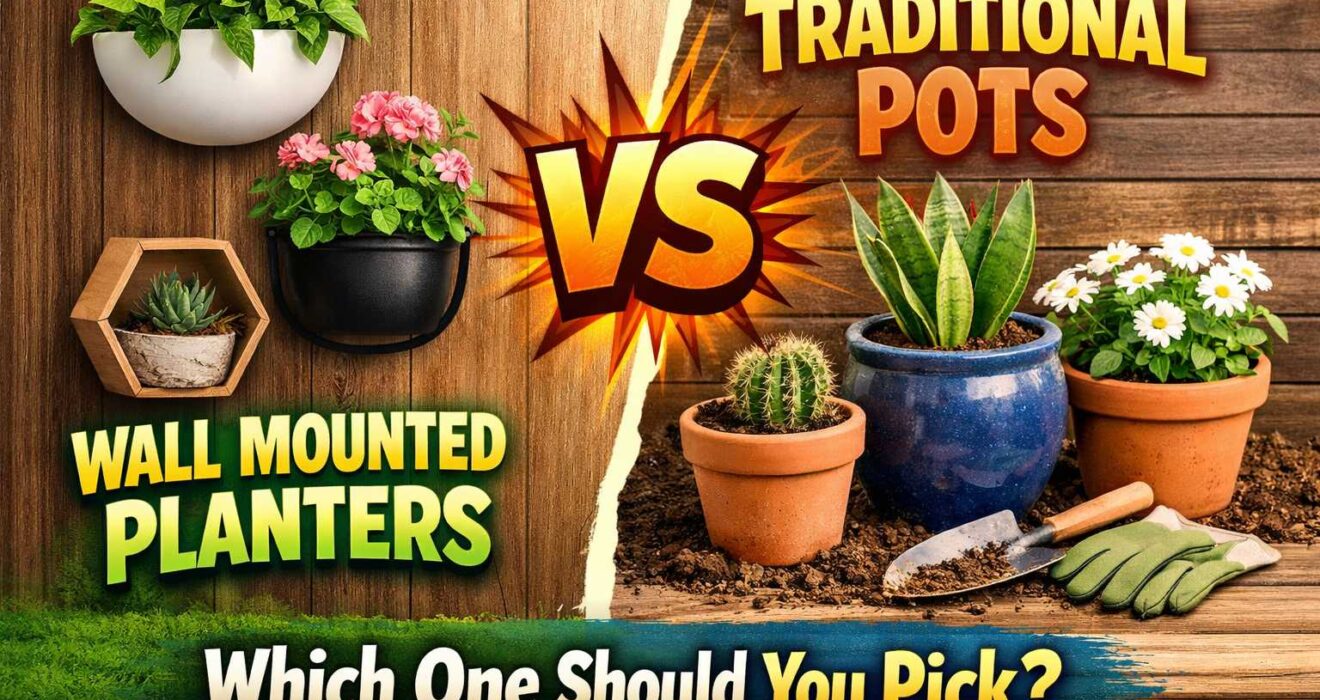
First Things First – What Are We Even Talking About?
If you love plants (or want to start loving plants), you’ve probably faced this question at some point: Do I hang planters on my wall, or just keep regular pots around the house?
Both options are awesome in their own way. But they’re also very different in cost, effort, looks, and how happy your plants will actually be. So let’s break it all down, no jargon, no complicated stuff. Just honest, friendly advice.
So What’s a Wall Mounted Planter?
Simple it’s any planting setup that goes on your wall instead of sitting on the floor. This includes:
- Fabric pocket panels (like a shoe organiser, but for plants!)
- Individual pots with wall brackets
- Modular pod systems you can click together like LEGO
- Wooden pallet gardens
- Big fancy “living walls” you see in hotels and cafés
The whole idea is: grow plants upward, not outward.
And Traditional Pots?
You already know these. The classic clay pot your grandmother kept tulsi in. The plastic pots from the nursery. The pretty ceramic one you picked up at a Sunday market. Any pot that just sits somewhere on the floor, on a shelf, on a windowsill that’s a traditional pot.
Simple as that. Now let’s compare!
1. Space – Who Wins When Your Home Is Tiny?
Wall Mounted Planters 🏆
Okay, this one isn’t even close. If you live in a small flat (and honestly, most of us do), wall mounted planters are a game changer.
Think about it this way – a 1-metre section of your wall can hold 15 to 25 plants. Those same plants in individual pots would eat up almost your entire living room floor. That’s wild, right?
Wall planters also make your room feel bigger. A bunch of pots scattered everywhere can look cluttered. But the same plants arranged neatly on one wall? Suddenly it looks like a design magazine shoot.
Traditional Pots
Big pots take up real floor space. That corner where your rubber plant sits? You can’t put a chair there. That’s just how it is.
But here’s the good thing – pots are super flexible with where you put them. On a bookshelf, a bathroom counter, a kitchen windowsill, a dining table, outside your front door. You can squeeze pots into all sorts of nooks that a wall panel just can’t reach.
Bottom line: Wall planters are better if space is tight. Pots are better if you want to spread plants all over the place.
2. How Do They Look?
Wall Mounted Planters 🏆
There’s something seriously impressive about a lush green wall full of plants. It’s the kind of thing guests walk into and immediately say “Whoa, this looks amazing.” It’s dramatic, it’s modern, and it makes any plain wall look like it belongs in an interior design blog.
Wall planters work really well with today’s popular home styles clean and minimal, natural materials, that calm “bring nature indoors” vibe.
Traditional Pots 🏆
But here’s the thing traditional pots have a warmth and personality that no wall panel can match. A hand-painted Rajasthani pot, a brass planter, a beautiful glazed ceramic piece the pot itself is an object of beauty, not just a container.
And a single, gorgeous plant in a stunning pot placed in the right corner of a room? That’s a whole vibe. It’s personal, it tells a story, it feels like home.
For Indian homes especially whether you have a traditional setup, a boho look, or a cozy mixed style pots just feel more natural and familiar.
Bottom line: Wall planters make a bold, dramatic statement. Traditional pots feel warm, personal, and homey. Honestly, both look great just in different ways.
3. Cost – How Much Are We Spending?
Traditional Pots 🏆
Traditional pots are cheap. Like, really cheap. A basic terracotta pot in India starts at around ₹20–₹50. Even a pretty ceramic one won’t usually cross ₹500–₹800. You can build a lovely collection of 10 to 15 pots for under ₹2,000 easily.
Wall Mounted Planters
Wall mounted planters have a bigger range. DIY options (like making your own fabric pocket panel) can cost as little as ₹500. But decent ready-made modular systems can run anywhere from ₹5,000 to ₹15,000 for a good setup. And those fancy professional living walls you see in restaurants? Those can cost ₹50,000 and up.
That said if you’re handy and creative, you can make a brilliant wall garden out of old plastic bottles, wooden pallets, or a second-hand ladder for almost nothing!
Bottom line: Traditional pots are way cheaper to start with. Wall planters can get expensive, but DIY options keep costs low.
4. Are the Plants Actually Happy?
Traditional Pots 🏆
This one goes to traditional pots and it’s not even a debate.
Here’s the thing: most wall mounted planters have small, shallow pockets for each plant. That means limited soil, limited space for roots to grow, and less moisture to keep the plant going. For smaller plants like herbs, succulents, and money plants, that’s totally fine. But for bigger plants? They’ll be cramped and unhappy.
Traditional pots give plants room to breathe, grow, and really establish themselves. You can choose exactly the right pot size for each plant. A big pot for a big plant. Simple.
Also watering. In traditional pots, it’s dead simple: pour water in the top, it drains out the bottom, done. In wall mounted systems, getting the watering right is trickier. The top row might be too dry while the bottom row is waterlogged. You really have to pay attention.
Bottom line: Plants are generally healthier and happier in traditional pots. Wall planters are great for smaller, easygoing plants but not ideal for everything.
5. How Much Work Are We Talking?
Traditional Pots 🏆
Pots are easy. Water them, feed them occasionally, repot them when they get too big, and that’s pretty much it. Even if you’re a total beginner, you’ll figure out the rhythm within a couple of weeks. And if one plant is struggling? Just move it to a better spot. Done.
Wall Mounted Planters
Wall planters need a bit more love. Watering is more complicated (as we just talked about). Replacing a dead plant in a pocket panel can be a bit messy. Keeping things looking tidy takes regular attention especially if the panel gets dusty or develops mould in rainy season.
They’re not impossible to maintain millions of people do it! But you do need to be a little more dedicated and organised about it.
Bottom line: Traditional pots are much easier to take care of, especially if you’re new to gardening.
6. What About Renters?
Traditional Pots 🏆
If you’re renting and in Indian cities, a huge number of us are traditional pots are the obvious winner. They require zero changes to your home. No drilling, no wall damage, no fighting with your landlord. When you move out, you pack up your pots and take them with you. Clean and simple.
Wall Mounted Planters
Most wall mounted planters need you to drill into the wall, which most landlords won’t allow. But there are smart workarounds hook-over balcony railing planters, tension rod systems, freestanding trellis frames, and fabric panels hung from curtain rods all give you the wall garden look without touching the walls.
So it’s doable! It just takes a bit more creativity.
Bottom line: Pots are perfect for renters. Wall planters can work in rental homes too, but you’ll need to choose the right non-drilling options.
7. What’s Safer for Your Walls?
Traditional Pots 🏆
Pots sit on the floor. No stress on your walls at all. Easy.
Wall Mounted Planters
A full wall planter system with soil, water, and plants can get surprisingly heavy sometimes 50 kg or more for a large installation. Not all walls can handle that, especially in Indian apartments where many partition walls are made of lighter materials.
For smaller, lighter wall planters (a few individual bracket pots or a fabric pocket panel), it’s usually fine. But for anything big, make sure you’re drilling into a solid load-bearing wall and using proper heavy-duty wall anchors.
Bottom line: Pots are completely safe. For wall planters, just check your wall type before going big.
8. Which Is Better for the Environment?
Both Can Be Great – Depends on Your Choices
Good old terracotta pots made by local artisans? Super eco-friendly. Made from natural clay, completely biodegradable, and they support traditional craft communities. That’s a win all around.
Plastic pots from the nursery? Not so great for the environment but if you reuse them for many years, the impact is lower.
For wall planters, natural materials like jute fabric panels, bamboo, or untreated wood are excellent eco choices. Just avoid cheap plastic modular systems that break down quickly and end up in the trash.
Bottom line: Choose natural materials for both, and you’re doing great either way.
The Smart Move: Use BOTH!
Here’s the secret that experienced plant parents already know you don’t have to choose! The best home gardens use both wall planters and traditional pots, playing to the strengths of each.
Use wall mounted planters for:
- That one dramatic feature wall you want to wow guests with
- Your kitchen herb garden (mint, tulsi, coriander right on the wall how handy is that?)
- Filling up a small balcony with tons of greenery without blocking the space
- Covering an ugly boundary wall outside
Use traditional pots for:
- Bigger plants like rubber plants, palms, monstera, or flowering shrubs
- Beautiful artisan or ceramic pots you want to show off
- Vegetables and plants that need deeper soil
- Moving plants around with the seasons or as your décor changes
Imagine a living room with a gorgeous green wall panel as the centrepiece, and two big statement plants in beautiful handcrafted pots on either side. That’s the sweet spot and it’s absolutely stunning.
Quick Cheat Sheet
| What Matters to You | Go With |
|---|---|
| Saving space | Wall Mounted Planters |
| Tight budget | Traditional Pots |
| Easy maintenance | Traditional Pots |
| Dramatic looks | Wall Mounted Planters |
| Big or diverse plants | Traditional Pots |
| You’re renting | Traditional Pots (or renter-friendly wall options) |
| Eco-friendly choice | Terracotta Pots or Jute/Bamboo Wall Planters |
| Kitchen herbs | Wall Mounted Planters |
| Moving homes often | Traditional Pots |
| Modern, minimal style | Wall Mounted Planters |
So… Which Is Actually Better?
Pick wall mounted planters if:
- Your home is small and floor space is precious
- You want a stunning, modern look
- You’re happy to put in a bit more maintenance effort
- You want to grow lots of small plants like herbs and trailing plants
Pick traditional pots if:
- You’re just starting out with plants and want to keep it simple
- You’re renting your home
- You want to grow big, thriving plants
- You love the warmth of beautiful handcrafted pots
- You move homes often
Pick BOTH if:
- You just really love plants and want the best of everything (honestly, that’s most of us!)
At the end of the day, there’s no wrong answer here. The best garden is the one you actually enjoy whether it’s a single tulsi plant in a little terracotta pot on your windowsill, or a full living wall covering an entire room. It’s all beautiful. It’s all worth it. 🌿
Happy Gardening!